GIB Inventory
Inventory Control Built Directly into SAP
-
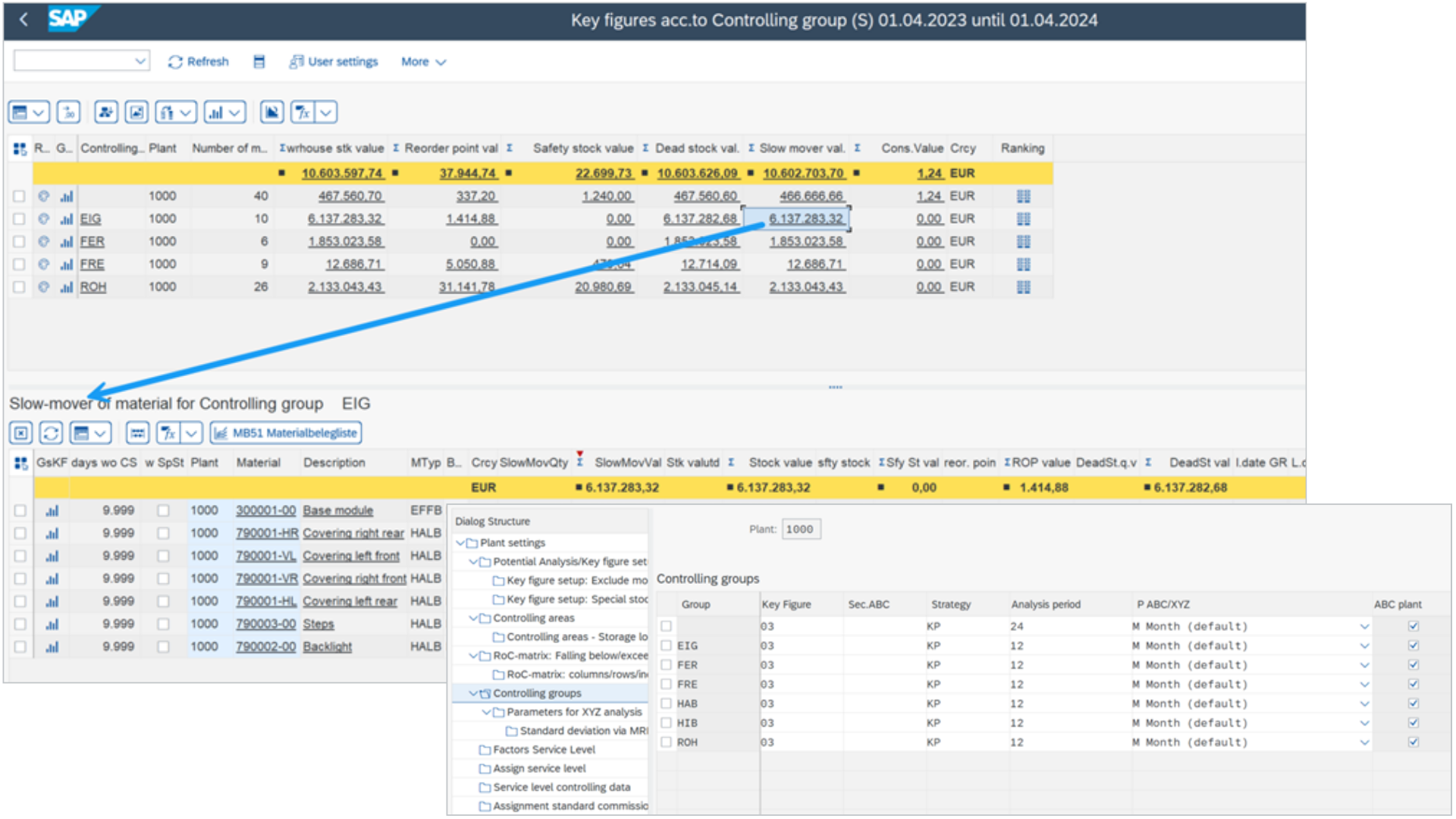
GIB analyzes SAP material document history (movement data) to build statistically accurate inventory key figures across defined time horizons. Metrics such as stock value, average stock, slow movers, dead stock, and consumption variability are calculated directly from historical movements.Instead of reviewing what inventory looks like today, planners see how inventory behaves across plants, MRP areas, and Controlling Groups over time. Controlling Groups are categorically unique material groupings where different MRP strategies can be applied. These groupings are defined using different combinations of SAP material master fields and can vary by plant.
-
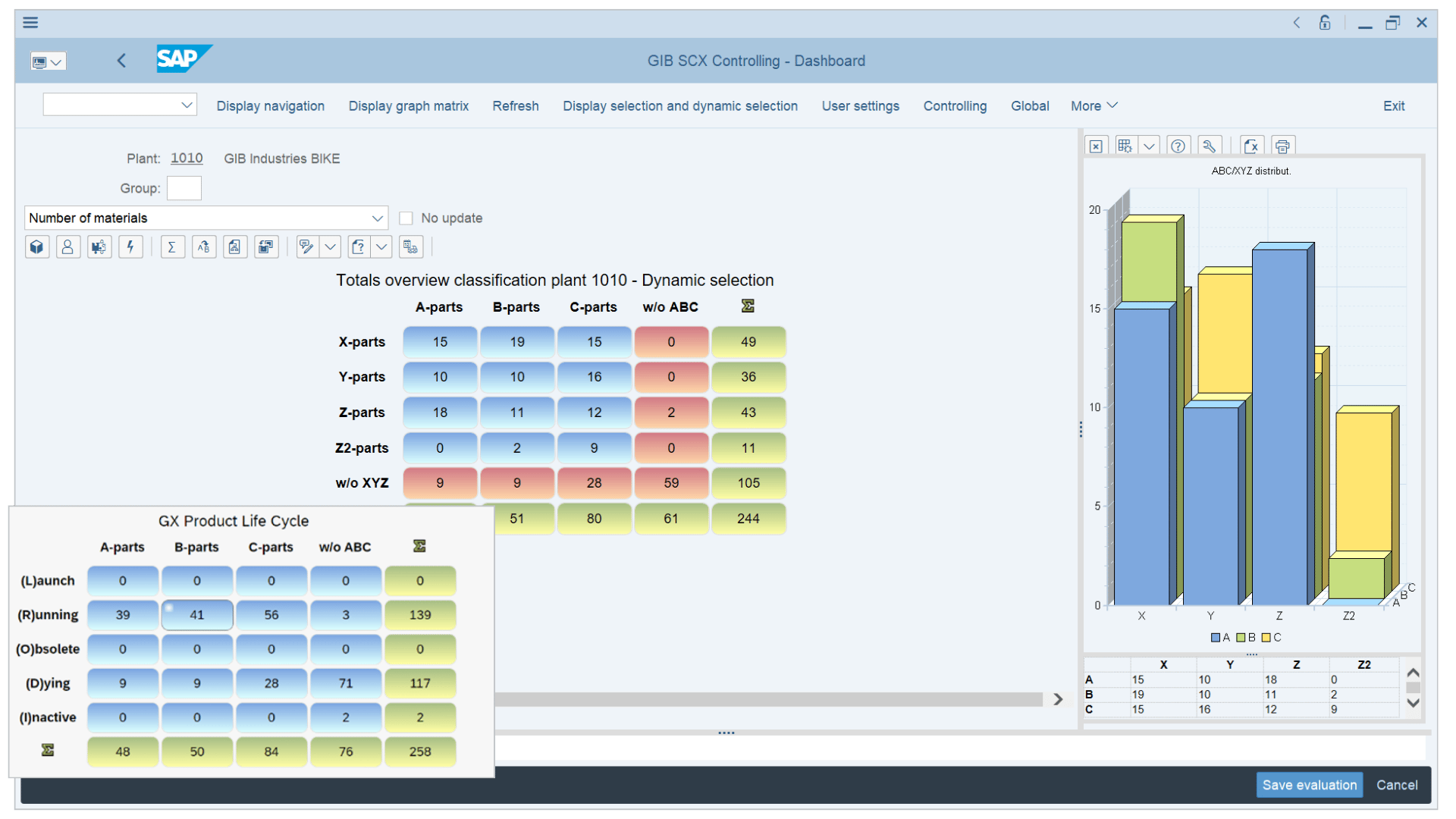
Through ABC, XYZ, and Product Life Cycle (LRODI) classification, GIB segments materials based on consumption value, demand regularity, and lifecycle stage. Classification logic is maintained centrally and applied consistently across plants or Controlling Groups.
Planning strategies are then aligned to these classifications. For example, stable high-volume materials follow different safety stock and replenishment logic than irregular or slow-moving items. This prevents uniform planning rules from creating excess inventory or service risk.
-
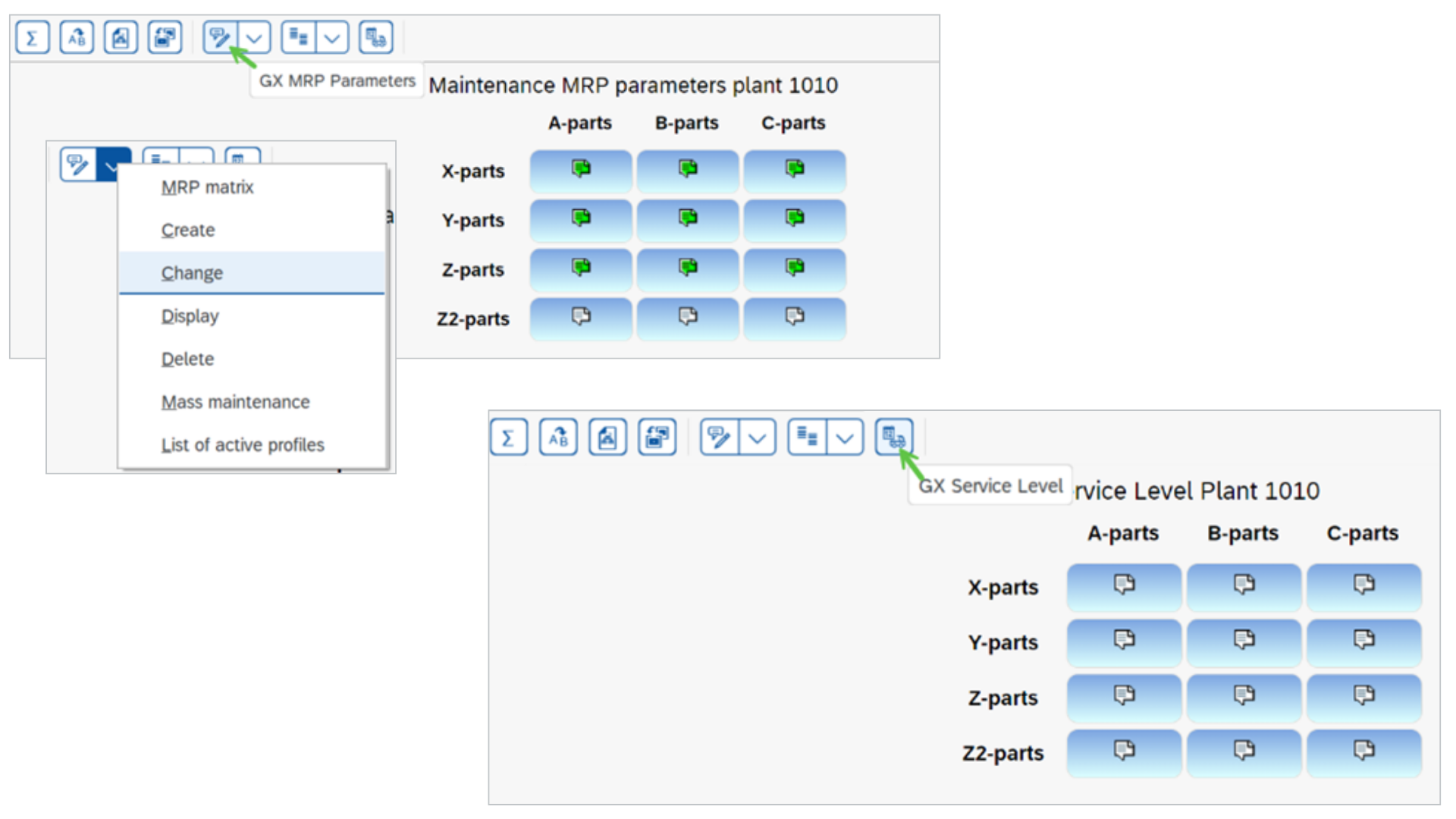
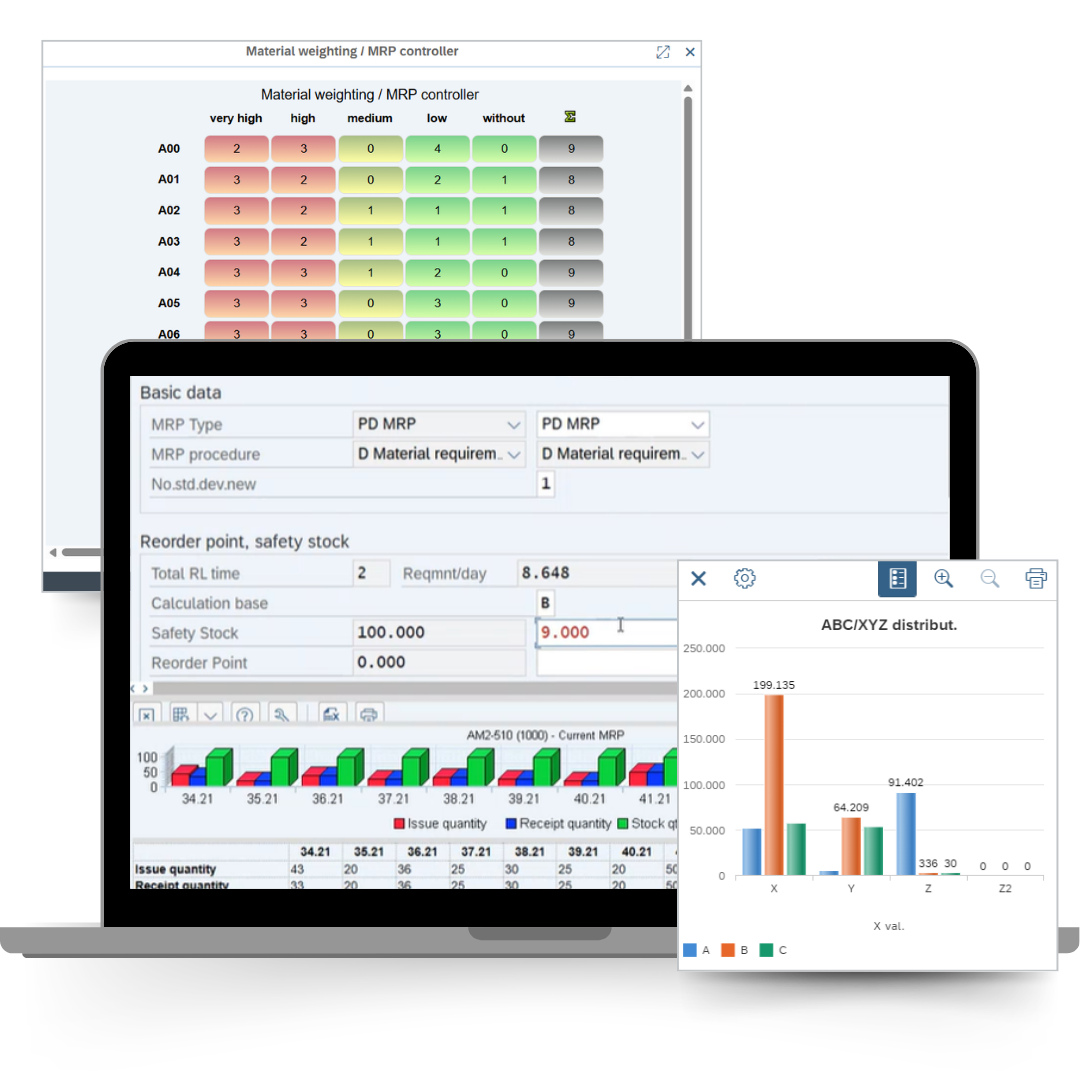
GIB allows you to assign MRP parameters and service levels based on ABC/XYZ classification and Controlling Group.
Instead of changing safety stock, MRP type, lot size, or service level one material at a time, you define the rules once in the GIB MRP Parameters matrix and GIB Service Level matrix. For example, A/X materials can follow one planning logic, while C/Z materials follow another.
These rules are then applied consistently across all materials in that category. The defined service levels are used in both simulation and MRP matching, so calculated safety stock values and replenishment behavior follow the planning strategy you’ve set. This reduces manual master data maintenance and ensures proper inventory alignment with demand.
-
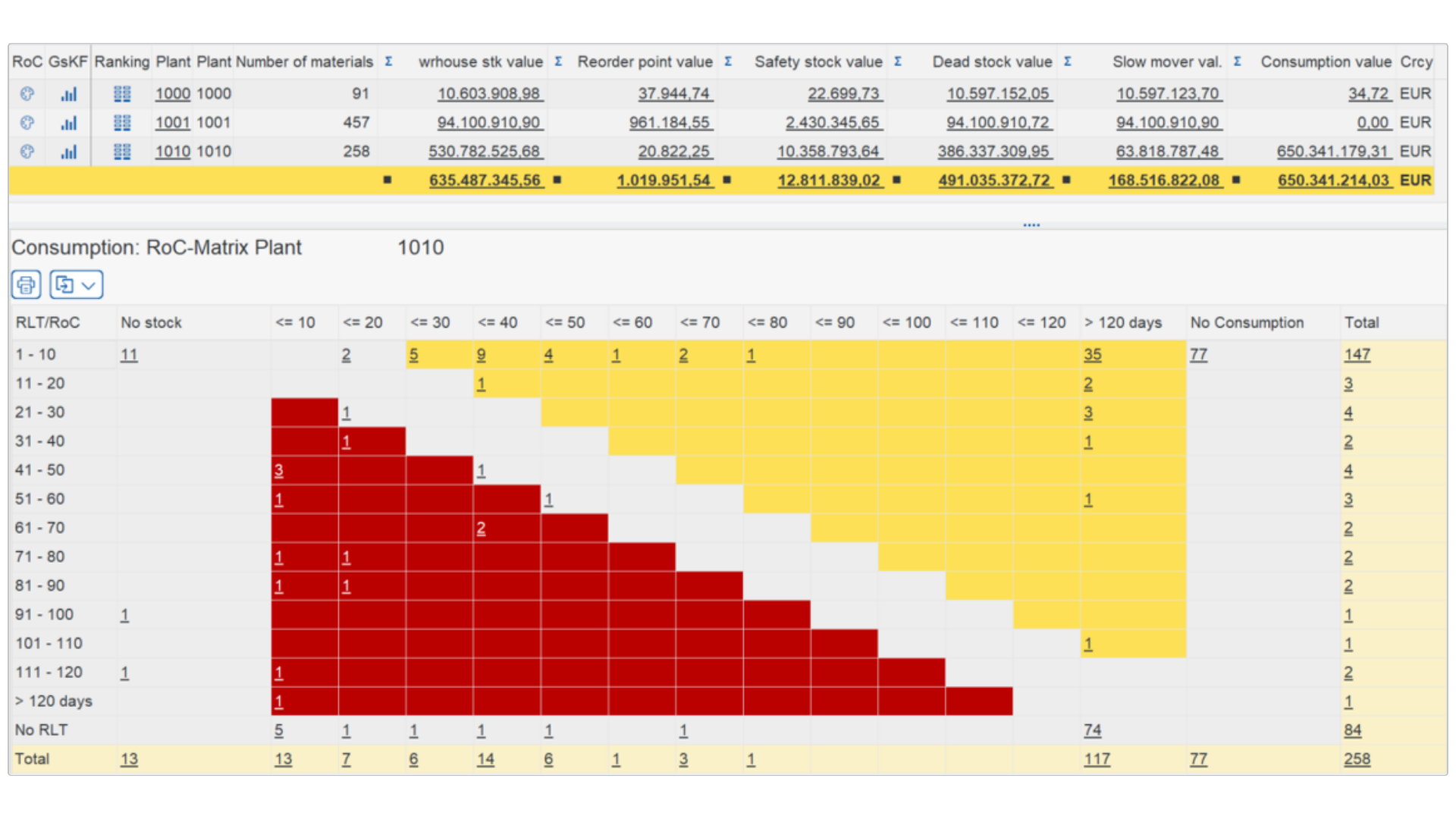
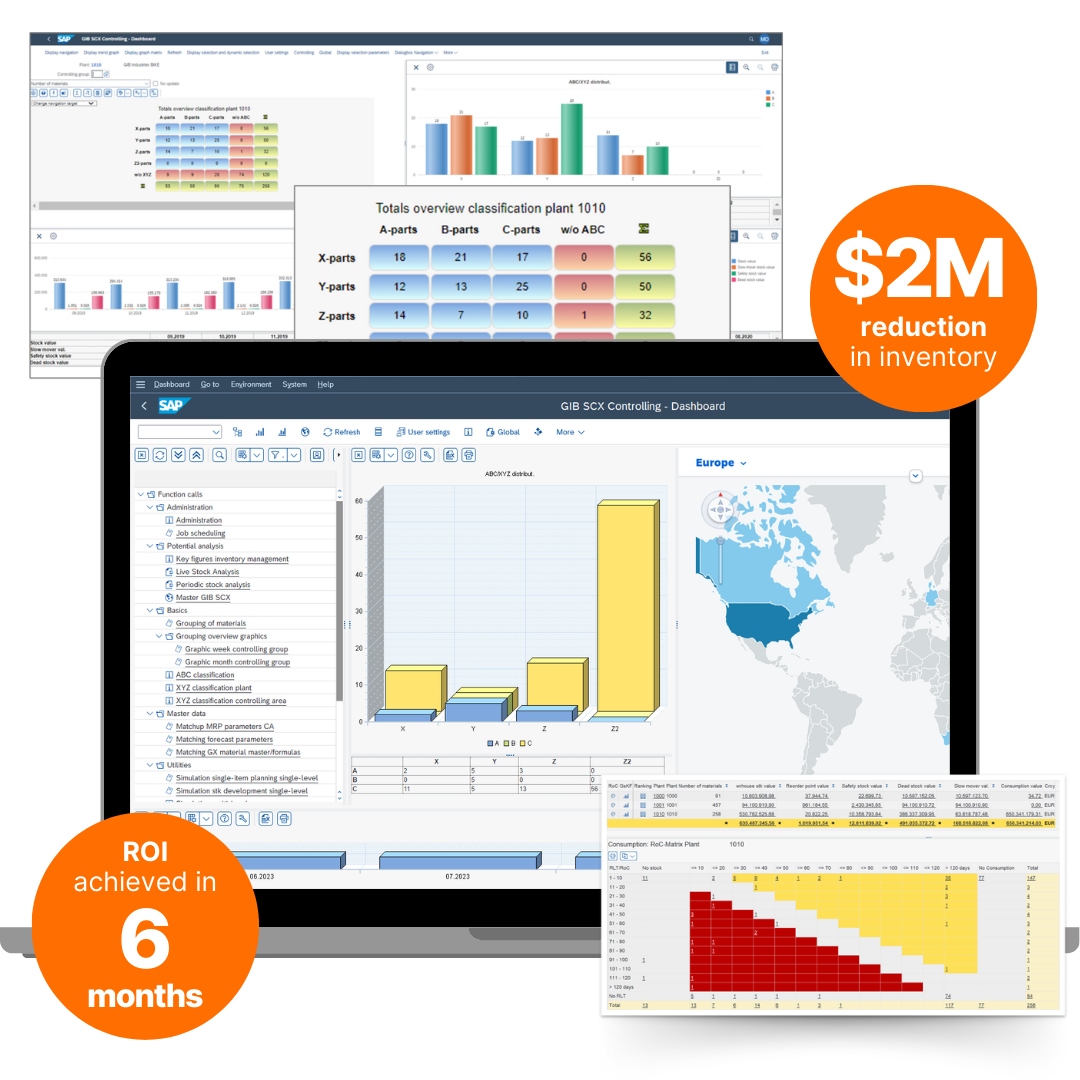
Replenishment Lead Time (RLT) is calculated using defined priority logic and compared to forward-looking Range of Coverage (RoC). This makes it possible to identify materials where coverage is too short relative to replenishment time, or excessively long relative to demand. Inventory availability is evaluated using days of supply versus actual lead time performance — not stock quantity alone.
For example, if a material has 10-20 days of supply but requires 51-60 days to replenish based on the RLT, then it is immediately flagged as a supply risk (red section). Materials are positioned within a structured RoC matrix, allowing planners to identify exposure at a glance and drill into detailed analysis directly within SAP.
-
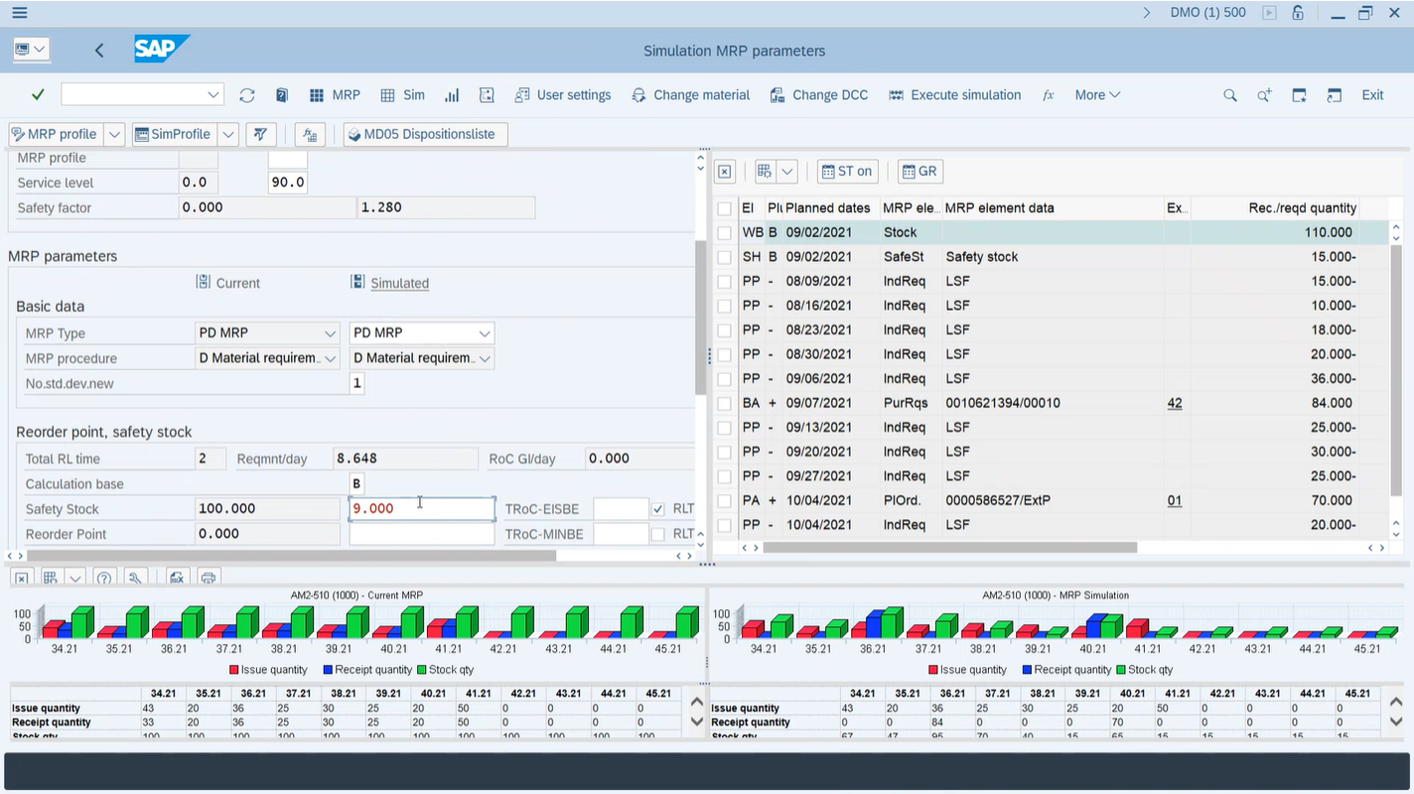
Planners can simulate changes to safety stock levels, service targets, lot sizes, and reorder logic without immediately updating SAP master data. The impact on coverage, stock value, and MRP proposals can be reviewed before parameters are transferred. This allows adjustments to be tested and validated before they affect live planning runs.
-
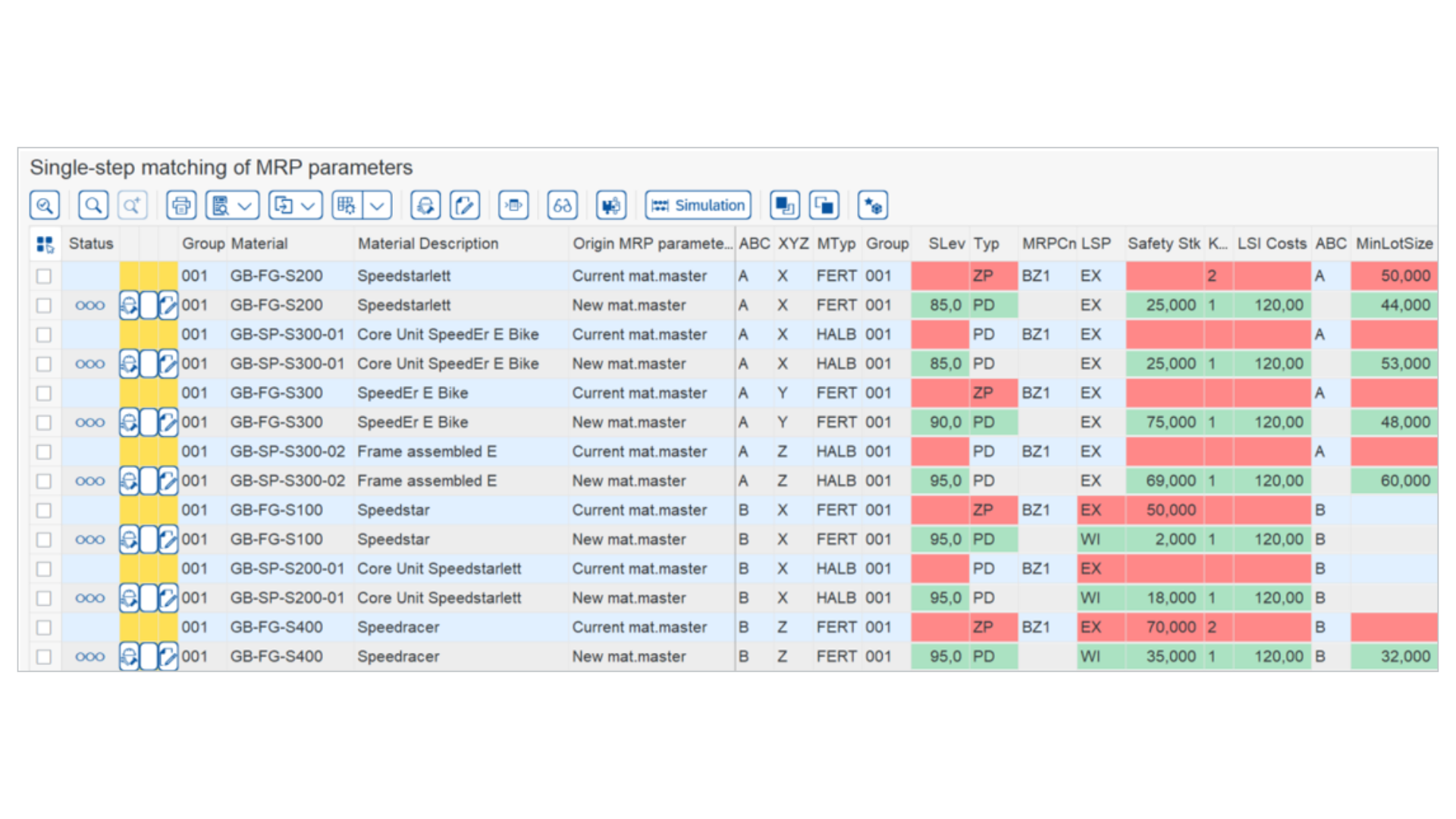 GIB compares recalculated MRP parameters — including safety stock, lot-sizing procedures, MRP types, and service levels — against existing SAP material master data. Differences between current and proposed values are clearly identified, allowing planners to review and approve adjustments before they are written back. Updates follow a controlled process aligned with defined policy rules, ensuring parameter changes are deliberate and consistent across materials.
"By using GIB Inventory and GIB Operations, we have sped up our material planning processes by more than 67%. We have been able to reduce our scrapping by 73% - the interaction with GIB Forecast has played a significant role here - and last but not least, we have been able to increase our delivery readiness by 3%. "
Mehmet Kozan | Manager, Supply Chain Management at Baier & Schneider (Brunnen)



.png)